Focused arrival windows
Useful updates and clear arrival timing.
EPDM Roofing in Huntsville is the single-ply answer for low-slope and flat roofs that keep catching water. We install, repair, and maintain EPDM membrane systems for garages, shops, additions, and commercial buildings across Huntsville, Texas. If your flat roof ponds after every storm or you are tired of patching the same seam, we can give you a roof that sheds water and holds up to hail.
Useful updates and clear arrival timing.
Review the approach and price before deciding.
Equipped vehicles and respectful cleanup.
Neighbors serving neighbors with follow-through.
Every EPDM project starts with a full inspection and a written scope. Here is what is included in a standard installation. If your deck needs structural repair or your insulation is saturated, we will flag that before work begins so there are no surprises on the final invoice.
We remove the old membrane, flashing, and wet insulation, then haul it away in a dumpster we place on site. On a 1,500-square-foot roof, tear-off and disposal usually take one to two days.
We check every deck board for rot and delamination. Rotted plywood gets replaced and refastened before insulation goes down. Skipping this step is why some flat roofs fail within five years.
We install polyiso insulation board, tapered toward the drains where ponding has been a problem. Proper slope is the difference between a roof that sheds water and one that holds it.
We install 60-mil EPDM membrane, adhered or mechanically fastened per manufacturer spec. Every seam is cleaned, primed, and rolled with splice tape. We use roofing nail guns set for membrane fastening, not shingle nailing.
Wall flashing, curb flashing, pipe boots, and drain details are set with termination bars and sealant. These are the parts that leak first, so we spend the time here rather than rushing to the finish.
We register your EPDM system with the manufacturer and hand over the paperwork at the final walkthrough. Certified installations qualify for full-system warranties covering both labor and materials.
Share what is happening and receive a clear next step from the local team.
EPDM Roofing in Huntsville is a single-ply rubber membrane system that seals flat and low-slope roofs against standing water, hail, and UV. The membrane arrives in large sheets, gets adhered or mechanically fastened over a clean substrate, and every seam is spliced with primer and splice tape. We set flashing at walls, curbs, and drains, then finish with termination bars and sealant. Most residential and light commercial flat roofs here run 500 to 3,000 square feet, and a full tear-off and re-cover takes two to four days depending on deck condition and weather.
Huntsville sits in Walker County where summer attic temperatures push past 140 degrees and spring hail rolls through in waves. Flat roofs on shops, carports, and room additions take the worst of it because water has nowhere to run. EPDM roofing in Huntsville Texas handles that cycle better than rolled modified bitumen in most cases, especially when the deck has settled and ponding water is a chronic problem. If you have been searching for EPDM roofing near me Huntsville, the real question is whether your deck can take a membrane system or needs structural work first.
We walk the roof, check the deck for soft spots, and run a moisture scan to find trapped water in the existing system. If the insulation is saturated, a re-cover will fail, so we tell you that upfront. This takes about an hour on a typical 1,500-square-foot flat roof.
We remove the old membrane, flashing, and wet insulation, then inspect the deck boards. Rotted plywood gets replaced, and we refasten any loose decking. On a 1,500-square-foot roof, tear-off usually runs one to two days with a crew of three and a dumpster on site.
We install polyiso insulation board, tapered where drainage needs help, then mechanically fasten it to the deck. A clean, flat substrate is what makes the membrane last. We sweep the entire surface with a magnetic sweeper before the rubber goes down so no screws or staples puncture it.
We roll out the EPDM membrane, let it relax, then adhere or mechanically fasten it per the manufacturer spec. Seams get scrubbed with splice cleaner, primed, and rolled with splice tape. Flashings at walls, curbs, pipes, and drains are set with termination bars and sealant. This is a one to two day stage.
We hose-test the roof, check every seam and flashing by hand, and clear the gutters and drains. Then we walk the job with you, show you what we did, and hand over the manufacturer warranty paperwork. Total project time on a standard flat roof runs three to five days.
Fastens insulation board and membrane per manufacturer spec. We set the depth so fasteners seat flush without dimpling the membrane surface.
Rolls splice tape into the membrane after priming. A properly rolled seam is stronger than the membrane itself, which is why we do not skip this step.
Finds trapped water in existing insulation before we quote a re-cover. If the meter reads wet, a re-cover will fail and we tell you that upfront.
Picks up screws, staples, and metal shavings from the deck before the membrane goes down. A single screw left behind can puncture EPDM.
Keeps our crews tied off and stable on steep access points and roof edges. OSHA safety certification is required on every job we run.
Clears debris from drains and roof surface, and removes old flashing and termination bars during tear-off without damaging the deck.
We bond the membrane to the insulation with contact adhesive. This is the cleanest installation for most Huntsville flat roofs and produces a smooth, low-profile surface with no fasteners penetrating the membrane.
We fasten the membrane and insulation to the deck with plates and screws, then cover the fasteners with splice tape. This method works well on larger commercial roofs where wind uplift is a concern.
We lay out tapered polyiso panels to create slope toward the drains. This is the fix for chronic ponding, and we design it per roof rather than using a one-size approach.
We flood suspect areas in sections and watch from inside or with a moisture meter. This is how we trace flat roof leaks back to the actual entry point instead of guessing.
We tear off the old system, inspect and repair the deck, install tapered insulation, and put down a new EPDM membrane with proper flashing. Most shop roofs in Huntsville run 800 to 2,000 square feet and take three to four days. You get a watertight flat roof with a manufacturer warranty and no more monthly patch jobs. Most owners see the last leak within the first week after installation.
We phase the replacement so your business keeps operating. One section comes off and gets new membrane while the rest stays in service. We work around your hours and keep the loading areas clear. A new EPDM system with reflective membrane that lowers summer cooling load, plus documentation for your capital planning records.
Shingles are the wrong product for low slope. We remove them, prep the deck, and install EPDM membrane with proper edge termination and flashing against the main house wall. The addition stops leaking, and the transition to the main roof is flashed correctly so water does not get behind either roof.
We inspect the EPDM system, run a moisture scan, and issue a roof certification letter documenting condition and remaining service life. If repairs are needed to pass, we handle those first. You have documentation the buyer's lender will accept, and you avoid a last-minute price reduction over roof condition.
Huntsville sits in Walker County where the climate swings hard. Summer surface temps on a black flat roof can hit 160 degrees, and winter freezes push the membrane through expansion and contraction cycles. Spring hail is the biggest threat to flashing and vents, not the membrane field. Most of the flat roofs we work on are on shops, garages, carports, and room additions, plus commercial buildings along the I-45 corridor. Deck construction here is often 1/2-inch plywood over 2x8 or 2x10 joists, and we check span and sag before quoting a re-cover. If you have been looking for EPDM roof cost Huntsville TX numbers, the honest answer is that deck condition drives the price more than membrane thickness. We schedule most flat roof work in spring and fall when temperatures are moderate, because adhesive and splice tape behave best between 50 and 90 degrees.
Larger lots with shops and outbuildings that often have flat or low-slope roofs. Many of these roofs are 15 to 25 years old and due for replacement.
Mix of older homes with room additions and detached garages. Low-slope porch roofs here are frequently shingled and leaking at the seams.
Commercial buildings with large flat roofs and multiple drains. These need phased work so businesses stay open during installation.
Rural properties with barns and workshops. Flat roof sections on these buildings take heavy sun and need reflective membrane where possible.
Accelerates aging on dark membrane and stresses seams. We recommend reflective EPDM or a coating on roofs that get full sun all day.
Cracks vent boots and dents flashing more often than it damages membrane. We inspect penetrations after every major hail event.
Expands and contracts the membrane and flashing. Proper termination bars and sealant selection matter more here than in milder climates.
Tests drainage capacity. We verify drain size and strainer condition so the roof sheds water as fast as it falls.
A shop in Crabbs Prairie had a modified bitumen roof that ponded in three low spots. The owner had patched it four times in six years. Moisture scan showed saturated insulation across roughly 40 percent of the roof.
We tore off the old system, replaced 12 sheets of rotted decking, installed tapered polyiso, and laid 60-mil EPDM membrane. The roof now drains fully within an hour of a hard rain. No leaks in two years.
Maintenance: We clear the drains twice a year and inspect seams each spring. The owner keeps a log of the annual visits for warranty records.
A homeowner in Pine Hill had a ceiling stain that kept coming back after two other roofers patched the membrane. The actual leak was a cracked pipe boot flashing six feet from the stain.
We replaced the boot, resealed the penetration, and re-spliced two adjacent seams that had started to lift. The repair took one afternoon. The ceiling has stayed dry through two storm seasons.
Maintenance: We check the boot and seams during the annual maintenance visit. The homeowner now calls us after any hail instead of waiting for a stain.
A retail building on the I-45 corridor had a 6,000-square-foot flat roof with failing seams and two clogged drains. The owner could not shut the building down for a full replacement.
We phased the work over three weeks, replacing one section at a time. New EPDM membrane, reflective white, with rebuilt drain details. Cooling load dropped noticeably the first summer.
Maintenance: Quarterly drain clearing and an annual seam inspection keep the warranty valid. We coordinate visits around store hours.
Most flat roof calls we get in Huntsville come down to the same handful of failures. Here is what we see, what happens if you ignore it, and how we fix it.
Standing water stresses seams, grows algae, and eventually finds its way through flashing. Left long enough, it saturates the insulation and the deck below. We install tapered insulation to create positive slope toward the drains, then cover with EPDM membrane that tolerates intermittent ponding. If the deck has settled, we address that before the membrane goes down.
A seam that has started to peel lets water straight into the insulation. By the time you see a ceiling stain, the damage has usually been spreading for weeks. We clean and re-splice failed seams with primer and splice tape, then reset flashing with new termination bars. If the seam failure is widespread, we will tell you whether a full re-cover makes more sense.
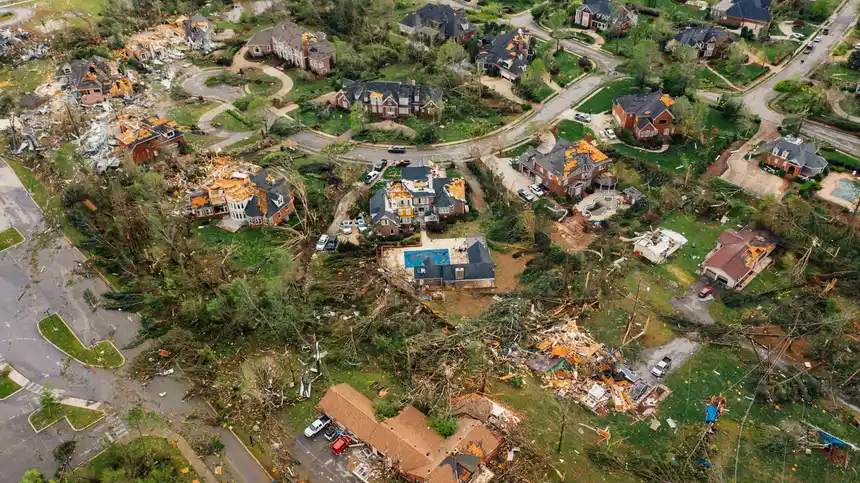
Hail rarely punctures EPDM membrane, but it cracks plastic vent boots and dents metal flashing. Those small failures let water in during the next rain. After a storm, we inspect every penetration and flashing detail. Cracked boots get replaced, dented flashing gets reset, and we document the damage with photos for your insurance claim.
A clogged drain turns a flat roof into a swimming pool. The weight stresses the structure and the water backs up under the membrane at the edges. We clear drains and gutters during every maintenance visit and after storm season. We also check that drain strainers are intact so debris does not immediately re-clog the line.
We had a 2,400-square-foot shop roof that ponded every time it rained. Pro Roofing tore off the old modified bitumen, added tapered insulation, and installed EPDM. That was two years ago and not a drop inside since. They showed me the moisture scan before they started, which is more than the last company did.
Our garage roof had a leak that three other roofers could not find. This crew hose-tested the whole flat section and traced it to a failed pipe boot flashing, not the membrane. They repaired it in an afternoon and charged a fair price. I have already recommended them to two neighbors.
We manage a retail building with a large flat roof, and hail season is always a worry. Pro Roofing inspected after the last storm, replaced two cracked vent boots, and resealed the flashing. They documented everything with photos for our insurance file. Fast response and no upsell.
Most residential flat roofs run $6 to $12 per square foot installed in 2026, so a 1,000-square-foot roof lands between $6,000 and $12,000. Commercial EPDM roofing Walker County TX projects with tapered insulation, multiple drains, and heavy flashing can push past $15 per square foot. Tear-off, deck repair, and roof height all move the number.
We do. Pro Roofing Huntsville installs Firestone and Carlisle SynTec EPDM membrane systems on flat and low-slope roofs across Huntsville, Texas and Walker County. We handle tear-off, deck repair, insulation, membrane, flashing, and warranty registration. Call us and we will schedule a roof inspection, usually within a few days.
A properly installed 60-mil EPDM membrane typically lasts 20 to 30 years in this climate. The field of the membrane rarely fails first. Seams, flashing, and drain details are what age out, which is why annual inspections and prompt EPDM roof repair in Huntsville Texas matter more than the membrane thickness you choose.
Yes. EPDM handles the freeze-thaw swings, summer heat, and hail that hit Walker County better than most flat roof options. It tolerates occasional ponding, resists UV degradation, and stays flexible in cold snaps. The main local risk is hail damage to flashing and vents, not the membrane itself, so we inspect those details after every major storm.
Not seeing your question? Our local team can help you understand urgency, scheduling and what to expect.
Ask the local team
New construction and additions in Huntsville often need a flat roof system from scratch. We install EPDM membrane on new decks, set the insulation and flashing, and coordinate with your builder so the roof is watertight before the interior work starts.
View serviceWhen an EPDM roof reaches the end of its service life, we tear off the old membrane and insulation and install a new system. Most Huntsville flat roof replacements take three to five days, and we handle the dumpster and disposal.
View service
Seam failures, punctures, and flashing leaks are the most common EPDM roof repair Huntsville calls we get. We clean the area, prep the membrane, and patch with splice tape and primer so the repair bonds permanently rather than sitting on top as a temporary fix.
View serviceWe inspect EPDM roofs after hail, high wind, or any time you notice ponding water that lingers more than 48 hours. The inspection covers seams, flashing, drains, and deck condition, and we give you a written report with photos.
View service
Call us any time, day or night. Our office answers from 8 a.m. to 6 p.m. Monday through Friday, and the emergency line stays open around the clock for active leaks and storm damage. Most Huntsville inspections get scheduled within 48 hours, and emergency calls get a same-day tarp.